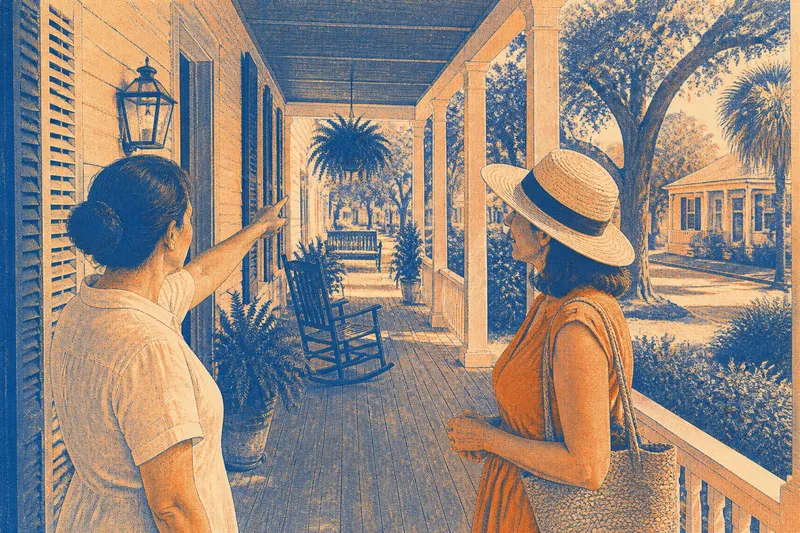
A Slow Afternoon Along a Main Street: What to Notice
A slow afternoon on a Southern main street reveals how shops, doorways and everyday movement shape a town, with simple ways to look without rushing.
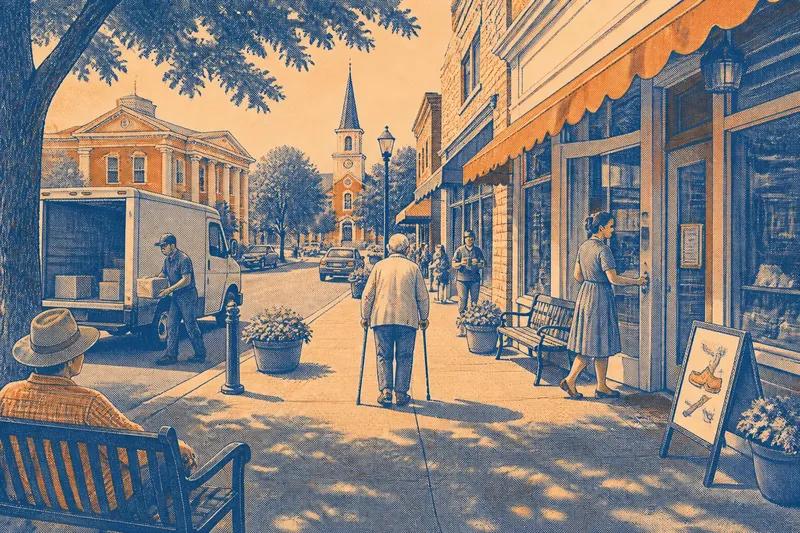
You step out of the car near a pharmacy, and a delivery van pauses while someone holds a shop door for a neighbour. A slow afternoon on a Southern main street begins in moments like this: not with a route to complete, but with room to notice how the town’s public life works.
Let the street set the pace. Look at the buildings, the edges where people enter and wait, and the small adjustments people make as they pass one another. These details can tell you more than a quick sweep of façades, especially if you resist treating the visit like a scavenger hunt.
Where should you begin on a main street?
Choose a place where you can pause without blocking a doorway or pavement: a public bench, a shaded corner, or a café table if you are a customer. Spend a little time looking in both directions before you start walking. Notice where the street feels open, where it narrows, and which destinations seem to draw people.
In a small Southern town, the central stretch may hold a courthouse, a church, a grocery, a bank, or a row of independent shops. In another place, the centre may be dispersed along a busy road, with a post office or a cluster of businesses doing the work of a traditional square. Avoid assuming that one arrangement represents every town.
Start with what is plainly visible: signs, entrances, benches, windows, shade and the condition of the pavement. Then ask how these pieces shape an ordinary visit. A broad window may let a shopkeeper notice someone approaching; a recessed entrance may offer a place to wait out a shower.
Stay on public paths and use spaces open to visitors. If a doorway, yard or side passage appears private, admire it from the street rather than stepping in.
What can storefronts tell you?
Look at the relationship between the business name, its display and the street. A hand-painted sign, a faded awning or a neatly lettered window can suggest what a shop wants passers-by to notice, but none tells the whole story. Read them as clues to the street’s present character, not as proof of how long a business has been there.
Pay attention to what appears at eye level. A shop might advertise alterations, farm supplies, tax preparation or lunch specials; another may leave its front window clear, making the activity inside part of the view. The mix of services can indicate what residents can do nearby, while an empty unit may point to a space between uses rather than a simple story of decline.
Compare neighbouring fronts without ranking them. A recently repainted façade beside an older brick building may show different choices about upkeep, ownership or use. Look for practical details too: a ramp, a doorbell, a posted opening time, or a shaded place to set down a parcel.
Say you pause outside a fictional shoe-repair shop beside a newly opened coffee counter. You notice a small bench, a sign asking customers to bring repairs inside, and people carrying drinks towards the bus stop; from those observations, you can infer how the street accommodates both errands and passing through, without claiming to know who owns either business or why it opened.
Why do thresholds deserve a closer look?
A threshold is the space where public street meets a building or business: a step, doorway, covered entrance, shop window or short stretch of pavement. These transitions often show how a place welcomes people, manages weather and handles the pause between walking and entering.
Notice whether the doorway opens directly onto the pavement or sits behind a small porch, vestibule or recessed bay. Is there a mat, a noticeboard, a place to lean a bicycle, or a clear view inside? Such details can make an entrance feel easy to approach or signal that a visitor should pause and check before going in.
In Southern towns, shade and shelter can shape the way people use a frontage. An awning may protect a window and create a cooler patch of pavement; a deep overhang may give people room to wait without standing in a doorway. These are practical features, but they also affect how long someone can comfortably linger.
Look for signs of shared use, such as a bench beside a shop, a public notice case or a broad set of steps used as a resting place. Do not assume that a useful-looking seat is public, though. A quick look for a sign, or a polite question at the business, can clear up whether it is available to visitors.
How does everyday movement shape the street?
Watch the flow in short, unhurried stretches. Where do people cross? Do they walk between shops, come from a car park, wait for a lift, or move between a bus stop and a nearby business? The pattern may change as an errand ends or a vehicle arrives, so one passing moment is not a complete portrait.
Listen as well as look. A bell over a shop door, conversation drifting from a café, a reversing vehicle or the call of a crossing signal can make movement easier to understand. Keep a respectful distance from conversations, and avoid recording people without asking.
Notice the street’s small negotiations: someone stepping aside to let another person pass, a driver slowing near a crossing, or a shop worker carrying a box around a busy entrance. These actions reveal how people share limited space. They do not need to be dramatic to matter.
Imagine you are watching from a public bench as a delivery vehicle briefly occupies part of the kerb. A person with a walking stick waits, then uses the clear part of the pavement when the vehicle moves; you can note how access depends on space and timing without turning the people involved into a story or assuming what they think.
What should you ask while you walk?
Which places seem to draw people in?
Look for repeated arrivals rather than a single busy doorway. A grocery, café, library or post office may attract people with different errands, while a bench or shaded corner can serve as a natural pause. Keep the observation modest: you can see where activity gathers without deciding why every person came.
Where does the street offer shade or shelter?
Compare the sunny side with the side under trees, awnings or upper-storey overhangs. Notice whether people choose a shaded route, wait near a sheltered entrance or cross to avoid glare. Shade changes with the time and weather, so treat what you see as a snapshot rather than a permanent rule.
How do people move between cars and shops?
Look at the connections among parking spaces, crossings, pavements and business entrances. A short walk may involve an awkward kerb, an easy crossing or a gap where pedestrians have to wait. You can observe these conditions without stepping into traffic or testing whether a route is accessible to everyone.
What seems to be changing, and what remains in use?
Notice visible signs such as a fresh sign beside an older façade, a window announcing a new business, or a familiar service sharing space with a newer one. Avoid treating age alone as a measure of value. A place may adapt through repair, reuse or changing customers while keeping parts of its earlier form.
How can you notice change without making assumptions?
Separate what you see from what you infer. “The upper windows are covered” is an observation; “the building has been empty for years” is a claim that needs more information. The same care applies to a shop’s appearance, the people entering it and the condition of a pavement.
Buildings often carry more than one period of use. A former bank may now house offices; a once-residential upper floor may sit above retail space. You can notice different materials, blocked openings or newer signs without assigning a precise date or inventing a history.
If you want context, look for information offered by the town, a local museum or a public heritage organisation. A sign on the building may explain a former use, while a librarian or shopkeeper may know where local information is available. Ask briefly and accept that people may be busy.
Respect privacy while you observe. Keep photographs focused on buildings or public details rather than identifiable people, and ask before photographing someone or looking into a private space. A good street visit leaves residents free to carry on with their day.
What can you notice if the street seems quiet?
Quiet does not mean empty of information. Look for signs of routine: a parcel by a doorway, a notice posted for a community event, a shop light switched on behind a partly shaded window, or a recently swept patch of pavement. Each detail offers a small, visible clue, not a complete explanation.
Check how the street meets its surroundings. A path may lead towards a school, a river, a churchyard or a residential lane; a line of trees may connect the business district to a square or public building. These edges can explain why a street is quiet at one moment and busier at another.
Notice what is maintained for people who are not shopping: a public bin, a drinking fountain, a bus shelter or a place to sit. Their presence suggests that the centre serves more than transactions. If an amenity is missing or out of order, simply record that visible fact rather than guessing who is responsible.
How can you leave room for an unplanned discovery?
Pick one direction and walk until something catches your eye, then pause without needing to add it to a route. It might be a painted sign, a shop window arranged around local produce, a shaded passage or a public noticeboard. Let the detail prompt a question rather than a conclusion.
If a business is open and you want to learn more, go in as a customer or ask a brief, considerate question. A straightforward “Is this entrance open to visitors?” or “Where can I find local information about this building?” gives the other person an easy way to answer or decline. Do not treat an ordinary errand as an invitation to interview someone.
Carry a small notebook if you like, but keep notes concrete: “bench under the awning”, “crossing beside the grocery”, “two entrances, one marked for deliveries”. That language will help you remember the street without turning a quick visit into a verdict about the whole town.
What makes a slow afternoon on a main street worthwhile?
A slow afternoon on a main street is worthwhile when you leave with a clearer sense of how its parts meet: where people enter, where they pause, what services draw them, and which paths connect the centre to its surroundings. You do not need to see every shop or explain every building.
Before you go, glance back along the block and note one detail you might otherwise have walked past: a bench positioned to catch shade, a second entrance around the side, or a crossing that links two busy corners. That single observation can stay useful the next time you visit, when the weather, businesses and people may all have changed.