Why Cast-Iron Skillets Hold Heat After the Flame Goes Out
Why cast-iron skillets hold heat: learn to read the pan’s stored warmth, time the burner and transfer food before its surface keeps cooking.
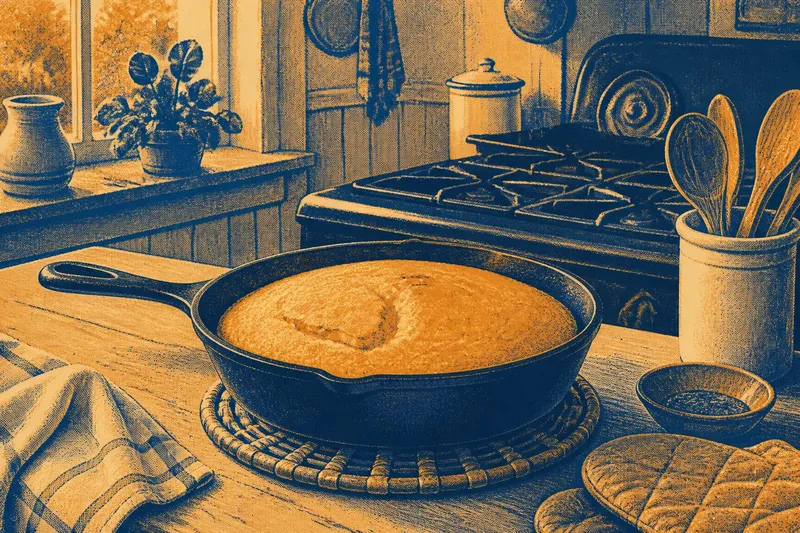
You lift a cornbread skillet from the oven, set it on a trivet and hear the edges crackle on. The burner is off, but the cast iron is still sending heat into the batter. Understanding why cast-iron skillets hold heat helps you decide when to move food, lower the flame or take the pan off the hob entirely.
Why cast-iron skillets hold heat
Cast iron is dense and substantial, so a skillet takes time to warm through. Once heated, it also takes time to cool. The pan has stored energy throughout its body, not just in the cooking surface, and that energy continues to move into food after the flame disappears.
This is heat retention, not a promise that every part of the skillet will be equally hot. A burner can warm the centre faster than the sides, and a pan placed over a small flame may develop a hot spot before the rest catches up. The handle and rim can feel cooler even while the cooking surface remains fierce.
Think of cast iron as a slow-moving heat reservoir. It is less responsive than a thin aluminium pan: turning down the hob does not immediately remove the heat already held in the metal. That steadiness can help with foods that benefit from sustained contact, but it calls for earlier adjustments when browning is moving too quickly.
Warm the skillet gradually before adding food
Begin with a clean, dry pan on a low or medium setting rather than starting at full heat. Give it time to warm across the cooking surface, then add the oil or other cooking fat. Gradual heating helps reduce the difference between the hot centre and cooler edges.
For a practical check, hold your hand above the pan without touching it. You are looking for a consistent sense of rising warmth, not trying to judge an exact temperature. A small drop of water can also show whether the surface is warming, but avoid putting water into hot oil or using a wet pan for frying.
Use the burner setting as a starting point, then watch the food. If oil begins to smoke, remove the skillet from the heat and let it cool; do not wait for the pan to respond to a lower setting. Follow the oil container’s directions and the appliance maker’s instructions where they apply.
Read the food rather than trusting the dial
Cast iron’s retained heat can make a moderate setting behave more assertively than expected. A slice of onion may begin to brown at its edges while the centre remains pale; a pancake can darken on the underside before bubbles have set across the top. Those signs tell you the pan is still transferring plenty of heat.
When food is colouring too fast, move the skillet off the burner for a short pause, or turn the heat down before the next batch. Simply lowering the dial slows new heat coming in, but the pan’s stored warmth remains. Keep a clear landing place, such as a dry trivet, ready before you lift a heavy skillet.
For foods that need a gentler finish, use the residual heat deliberately. Once a seared item has developed the colour you want, a brief rest off the burner may continue cooking the surface without adding more direct flame. The right point to stop depends on the food and the texture you want, so check it rather than relying on a fixed interval.
Account for carryover cooking after the pan leaves the hob
Food does not stop cooking the instant it leaves a burner. Heat continues to pass from the skillet into the food, and the outer layer can remain hotter than the centre. Thin foods and small portions can change quickly; a thick piece may need time for its warmer outer areas to share heat with the middle.
For a finished dish, transfer food to a plate or serving dish when you want to stop contact with the hot metal. A spoonful of vegetables left in the skillet can keep softening, while an egg can continue setting against the surface. If the recipe depends on a particular internal temperature, use an appropriate food thermometer and follow sound food-safety guidance.
Say you are frying two batches of sliced potatoes and the first batch turns deep brown before it softens. You take the skillet off the burner, lift out the potatoes and wait until the oil’s activity settles before cooking the next batch at a lower setting. The observable aim is slower browning, giving the potatoes more time in contact with the pan without the surface racing ahead.
Choose the skillet’s next move by the dish
Some recipes call for moving a skillet from hob to oven, but the pan’s mass means it will retain heat during the transfer and after it comes out. Use oven gloves, set it on a heat-safe surface and keep the handle clear of the edge. A handle cover protects your grip only if it is designed for that use and fitted as directed.
For cornbread or a pan-roasted dish, that stored warmth can help maintain a hot cooking surface during a short transfer. For delicate foods, the same quality can be a nuisance: remove the food promptly or move it to a cooler dish. A wooden board, thick trivet or suitable rack can protect the worktop, but do not assume a folded tea towel is a safe substitute.
After cooking, allow the skillet to cool before cleaning or putting it away. Sudden temperature changes can stress the metal, and handling the pan while it still looks cool can cause burns. Clean and care for it in keeping with the maker’s instructions and the condition of its seasoning.
What cooks ask about retained heat?
Does cast iron heat evenly?
Not automatically. The metal stores heat well, but the burner’s shape and the way the skillet is warmed can leave the centre hotter than the outer cooking area. Gradual preheating and occasional repositioning can help even out the cooking.
Why does food keep cooking after I turn off the burner?
The flame has stopped adding heat, but the skillet has not lost the energy it already absorbed. That remaining warmth continues to flow from the pan into the food until the pan and food cool.
Should I leave cooked food in the skillet?
Only if you want the residual heat to keep affecting it. For eggs, vegetables or other foods that can overcook easily, transfer them to a serving dish once they are ready; for a dish meant to stay warm briefly, the skillet can help, provided it rests on a suitable surface.
Is a hot handle a sign the pan is ready?
No. The handle’s temperature does not reliably tell you whether the cooking surface is evenly heated. Treat the entire skillet as hot, use proper protection and judge readiness by the pan and food rather than by touching the handle.
Use stored warmth as part of the cooking
Once you understand why cast-iron skillets hold heat, treat turning off the flame as the start of cooling, not an instant stop to cooking. Warm the pan patiently, watch the food’s colour and texture, and move the skillet or its contents when the remaining heat no longer suits the dish. A trivet and a clear place to set the pan make that judgement easier to act on.
Before your next meal, decide which result you want after the burner goes off: a brief warm hold, a gentle finish or an immediate stop. That small decision turns the skillet’s stored heat from a surprise into another part of the cooking.