The Mint-Julep Shortcut: Why One Recipe Cannot Stand for the South
The mint julep is a Southern emblem, not a single regional recipe. See how one imagined family gathering makes room for local and household variation.
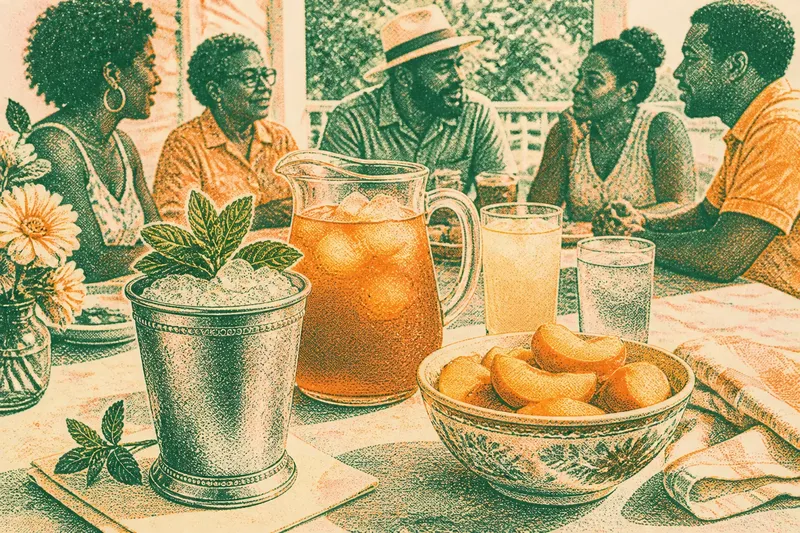
A mint julep sits beside a pitcher of sweet tea and a bowl of sliced peaches at a family gathering. The mint julep is a familiar Southern emblem, but one guest asks whether it can stand for Southern food culture. Around the table, people begin describing what they actually drink at home.
The mint-julep shortcut is treating one celebrated drink as shorthand for a region’s varied foodways. A specific gathering can show what that emblem captures—and what it leaves out.
A familiar recipe gives the gathering a starting point
Imagine June, who lives in a fictional Southern town, hosting relatives from nearby communities. She wants a drink for the adults and plans to serve it with dishes made by different branches of the family. A recipe card lists bourbon, mint, sugar, water and crushed ice; she chooses the julep because many people recognise it as Southern.
That choice makes sense for the occasion, but recognition is not the same as universal habit. The recipe does not tell June what every household serves, keeps on hand or considers local.
She writes “mint julep” on the menu and leaves room for other drinks. The card presents it as one offering rather than asking it to represent everyone at the table.
The other drinks give the emblem company
At the gathering, June’s cousin brings homemade lemonade. An aunt prefers unsweetened iced tea, and another relative mentions a fruit drink served at family reunions. A neighbour chooses water. None has to displace the julep; together, the choices show what these guests brought to this occasion.
The julep can vary, too. One person may want a stronger mint flavour; another may dissolve the sugar before adding ice. A host might set out ingredients separately so guests can adjust their glasses. These are household choices, not evidence of one correct local formula.
June listens as relatives explain that mint grows in one garden, the drink appears only at a particular gathering in another household, and one younger guest has never tasted it. The emblem carries a different meaning for each person, and no personal connection for some.
An ordinary household drink can tell a story about daily preference; a special-occasion drink can speak to ceremony. Neither needs to stand for the whole region.
Regional foodways are larger than a famous drink
“Southern” includes communities with different landscapes, histories and household practices. What is familiar in one family may be uncommon in another. A recipe’s fame shows that people recognise it; it does not show that everyone makes or drinks it.
A polished description can name the julep and its ingredients while omitting who prepared it, when it appeared, what else was served and how guests responded. Including those details shifts the account from a fixed symbol to food as lived practice.
In June’s gathering, calling the julep an emblem does not require her to claim it represents every guest’s taste. Asking relatives what they would serve at a family celebration brings their own customs into view.
How should you describe the mint julep’s place in Southern foodways?
Does the mint julep belong to every Southern household?
No single drink belongs to every household simply because it is associated with a region. Families may make it, adapt it, serve it rarely or leave it off the table.
Why is the mint julep a Southern emblem?
Its public recognition and familiar ingredients make it a recognisable symbol. That symbolic role is different from being an everyday custom shared by every household.
How can a host make room for different drink traditions?
Offer the julep as one choice, alongside drinks suited to the guests and occasion, such as tea, lemonade or water. Ask relatives what they associate with the gathering rather than assuming one recipe is universal.
Can a mint julep recipe change and remain recognisable?
Yes. A household can adjust the sweetness, mint or serving style while keeping the drink’s familiar character. Describing those choices is more useful than treating variation as a failure to follow tradition.
A concrete menu decision keeps the account honest
Say June starts with a menu card listing only mint juleps, and three relatives tell her they prefer lemonade, unsweetened tea and water. She adds those drinks to the card, then asks who brought each one and when they usually serve it. The resulting menu records the choices made for this gathering, not a claim about every Southern table.
For anyone writing or talking about Southern foodways, the same method is useful: name the emblem, then ask whether it is served at home, who makes it, when it appears and what else accompanies it. The answers turn a broad symbol into specific household and occasion-based stories.
Keep the symbol smaller than the region
June’s imagined gathering ends with the julep still on the table, but no longer alone in the story. The other drinks do not need equal fame or a special recipe card to count; they matter because the people present chose them and attached memories to them.
The mint-julep shortcut is easy to repeat because one emblem is easy to recognise. Describe the mint julep as one Southern tradition, then make room for the households, occasions and preferences that give Southern foodways their local texture.